

Refurbished Electronics Explained: Save Money and Go Green
TL;DR:
- Refurbished electronics are professionally tested, repaired, and come with warranties, unlike used items.
- Buying refurbished can save 30 to 60 percent compared to new devices, offering significant cost benefits.
- Choosing refurbished supports sustainability by extending device life and reducing e-waste in Singapore.
Most people assume that buying brand-new electronics is the only way to get reliable, high-performing devices. That assumption costs Singaporean shoppers thousands of dollars every year. Refurbished electronics, often confused with second-hand or used gadgets, are a completely different category with strict testing processes, clear quality grading, and real warranty coverage. This guide breaks down exactly what refurbished means, how much you can realistically save, why it matters for Singapore’s environment, and how to shop smartly so you get genuine value without risk.
Table of Contents
- What does ‘refurbished electronics’ mean?
- Cost savings: How much can you really save?
- Sustainability and environmental impact
- How to buy refurbished electronics safely in Singapore
- What most guides miss about refurbs in Singapore
- Find top refurbished tech deals in Singapore
- Frequently asked questions
Key Takeaways
| Point | Details |
|---|---|
| Major cost savings | You can save 30-60 percent on electronics by choosing refurbished over new. |
| Reduced environmental impact | Refurbished devices reuse most materials and sharply cut CO2 and e-waste. |
| Buyer vigilance matters | Selecting reputable sellers with transparent grading is essential in Singapore. |
| Growing Singapore market | The local market for refurbs is booming, offering more choices for consumers. |
What does ‘refurbished electronics’ mean?
The word “refurbished” gets misused constantly, and that confusion puts off buyers who would otherwise benefit enormously. Let’s set the record straight.
A refurbished device is one that has been returned, inspected, repaired where necessary, cleaned, tested against performance benchmarks, and repackaged before being resold. This process is structured and documented. It is not the same as buying a used phone from a stranger online, and it is not the same as purchasing a brand-new sealed unit.
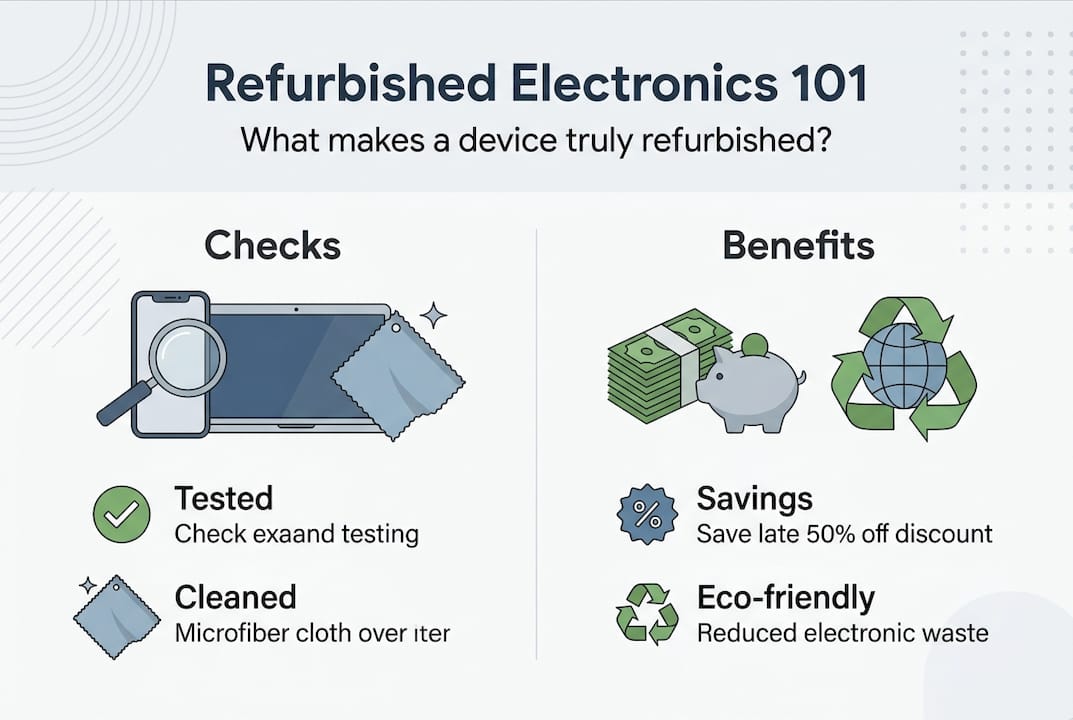
Here is where the key differences lie:
| Category | Condition | Testing | Warranty | Price vs. new |
|---|---|---|---|---|
| New | Factory sealed | Factory QC | Full manufacturer | 0% savings |
| Refurbished | Inspected and restored | Professional testing | Seller or manufacturer warranty | 30-60% savings |
| Used (secondhand) | As-is, unknown history | None or minimal | Typically none | Varies widely |
The refurbishment process typically covers several key stages:
- Inspection: Every component is checked against the original specifications, including the battery, screen, ports, camera, and internal hardware.
- Repair or replacement: Any failing parts are swapped out with working components, either original or compatible replacements.
- Deep cleaning: The device is cleaned inside and out to remove dust, debris, and wear marks.
- Software reset: Operating systems are wiped and reinstalled fresh so there is no leftover data from a previous owner.
- Quality testing: The device is run through stress tests and functional checks before being approved for resale.
- Grading: The device is labeled with a grade (commonly A, B, or C) that tells buyers about cosmetic condition. Grade A means near-perfect appearance; Grade C may have visible scuffs but fully working internals.
One important note for Singapore shoppers: there is no specific SG certification for refurbished electronics the way there is a SAFETY Mark for new regulated household appliances. This means the quality of a refurb depends entirely on the seller. Buying from transparent sellers who openly disclose their refurbishment process and grading system is critical. This practice also aligns with the circular economy model, which prioritizes reuse, donation, and extending the life of existing products over constant new manufacturing.
When you are choosing refurbished devices like laptops or phones, understanding what grade you are buying and what the seller’s testing process looks like will protect your purchase far better than any marketing label. Always ask before you buy.
Cost savings: How much can you really save?
With the basics covered, the next logical question is: does buying refurbished really make financial sense?
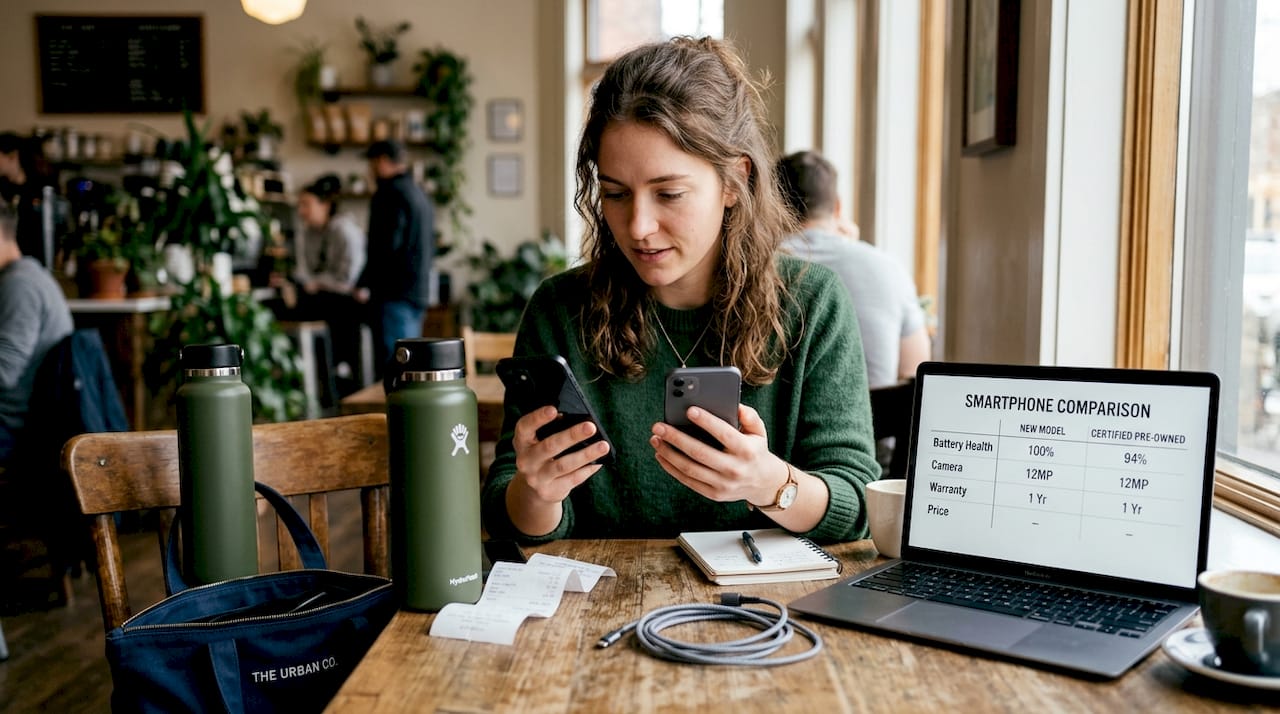
The short answer is yes, and the numbers are significant. On average, refurbished electronics carry a 30 to 60 percent lower purchase price than their new equivalents. When you factor in total cost of ownership (TCO), meaning the full cost to own and operate a device over several years, refurbs come out 25 to 40 percent cheaper over a three to four year period.
Let’s make this concrete with a real example. A brand-new iPhone 14 Pro retails at over SGD 1,000 in Singapore. A refurbished iPhone 14 Pro in Grade A condition from a reputable seller typically costs between SGD 550 and 650. That is a saving of 37 to 45 percent upfront. Over three years, assuming similar maintenance and repair costs, the refurbished buyer comes out hundreds of dollars ahead.
| Device | New price (SGD) | Refurbished price (SGD) | Savings |
|---|---|---|---|
| iPhone 14 Pro | 1,100+ | 550-650 | ~40% |
| MacBook Air M1 | 1,400+ | 800-950 | ~35% |
| Samsung Galaxy S22 | 900+ | 400-550 | ~45% |
| Sony WH-1000XM5 headphones | 480+ | 250-300 | ~40% |
These are not edge cases. Across most product categories, including laptops, smartphones, tablets, and audio equipment, the savings follow a consistent pattern.
Singapore’s recommerce market (the buying and selling of pre-owned and refurbished goods) is booming. The Singapore recommerce market is valued at approximately USD 2.37 billion in 2025, growing at a 14.5 percent compound annual growth rate. That growth signals rising consumer trust in refurbished products and a maturing ecosystem of sellers who compete on quality and price.
Pro Tip: When comparing prices across retailers, do not just compare the sticker price. Factor in the warranty period, what repairs are covered, and whether the seller offers a return window. A cheap refurb with no warranty can end up costing more than a slightly pricier one with 12 months of coverage.
For budget-conscious shoppers and those who want mid-grade performance without mid-grade prices, refurbished electronics consistently deliver the best value. You are not sacrificing performance. You are simply not paying for the new packaging. Check out available tech deals for refurbs in Singapore to see how competitive the current market really is.
Sustainability and environmental impact
Beyond your wallet, refurbs have a big impact on the planet. Let’s see how your next electronics choice shapes a greener future.
Manufacturing a single laptop requires mining rare earth metals, consuming enormous amounts of water, and burning energy across a global supply chain. The environmental cost is embedded in every new device before you even unbox it. Choosing a refurbished device sidesteps much of that cost.
Here are the core environmental benefits of going refurbished:
- Material reuse: Refurbished devices reuse 85 to 95 percent of the original device’s materials, meaning far fewer raw resources are extracted and processed.
- Emissions avoided: A refurbished laptop avoids 300 to 400 kilograms of CO2-equivalent emissions compared to manufacturing a new one. For a smartphone, the figure is 50 to 80 kilograms per device.
- E-waste reduction: Singapore generates significant volumes of electronic waste each year. Every refurbished device sold is one fewer unit headed for a recycling facility or landfill prematurely.
- Extended device life: Refurbishment can extend a device’s functional life by three to five years, reducing the frequency at which consumers need to buy replacements.
- Reduced demand for new manufacturing: When enough consumers choose refurbs, manufacturers face pressure to design more durable, longer-lasting products.
Singapore is not standing still on this. Local initiatives actively promote electronics reuse and repair as part of a broader sustainability push.
“Community-driven programs like Repair Kopitiam and Engineering Good are helping Singaporeans fix and rehome electronics rather than discard them, directly extending device life and cutting e-waste.” Care.biz, Singapore Guide to Sustainable Electronics.
These programs reflect a genuine cultural shift. Repair Kopitiam, for instance, operates community repair sessions where volunteers help residents fix broken devices for free. Engineering Good refurbishes donated electronics and distributes them to low-income families and nonprofit organizations. Both programs prove that sustainability in electronics is not just a global talking point. It is happening right here in Singapore.
When you visit stores across the levels of Sim Lim Square to find refurbished options, you are also participating in this local circular economy. Buying a refurbished device from a Singapore retailer keeps money in the local economy and supports the ecosystem of technicians, graders, and sellers who make responsible recommerce possible.
The circular economy model, which designs systems for reuse and regeneration rather than disposal, is exactly what refurbished electronics support. It is a practical, measurable way for individual consumers to reduce their carbon footprint without making dramatic lifestyle changes.
How to buy refurbished electronics safely in Singapore
Feeling inspired to switch? Here is how to do it safely and get the best value for your needs.
The biggest risk with refurbished electronics is not the devices themselves. It is buying from sellers who do not disclose enough about what they have done to the device. The absence of a specific Singapore certification for refurbs means the burden of vetting falls on you as the buyer. But with the right checklist, this is straightforward.
Steps to follow before buying any refurbished device:
- Ask about the refurbishment process. A reputable seller should be able to tell you what was inspected, what was replaced, and what testing the device passed. Vague answers are a red flag.
- Check the grading clearly. Understand what Grade A, B, or C means for that specific seller. Some sellers use different scales, so confirm what cosmetic and functional condition you are actually getting.
- Confirm the warranty terms. Look for at least 6 to 12 months of warranty coverage. Find out exactly what is and is not covered, and whether repairs are handled locally or need to be shipped overseas.
- Test the device before buying, if possible. In-store purchases at Sim Lim Square and similar retail hubs allow you to test devices physically, checking the screen, ports, buttons, battery, and software performance before you commit.
- Check return policies. Reputable sellers offer a return window of at least 7 to 14 days for defective items. No return policy is a serious warning sign.
- Research the seller’s reputation. Look for customer reviews, the length of time the business has been operating, and whether they have a physical store location you can visit.
- Avoid prices that seem too low. If a refurb is priced at 80 percent below new, something is off. Genuine refurbs in Singapore are typically 30 to 60 percent below retail, not 80 percent.
Pro Tip: When evaluating choosing the right device specs for a refurbished laptop, prioritize RAM and storage over processor generation. A slightly older chip with 16GB of RAM will outperform a newer chip with only 8GB for most everyday tasks.
The difference between online marketplaces and physical retail stores matters here too. Online platforms like Carousell and Lazada have many refurb listings, but the level of transparency varies dramatically between individual sellers. Physical stores, especially those in established tech retail hubs, generally offer better accountability, in-person testing, and clearer after-sales support. For first-time refurb buyers in Singapore, starting in a physical store is a lower-risk entry point.
After-sales support is often underestimated. Knowing you can walk back into a store with a problem is worth something real. Factor that accessibility into your buying decision alongside price and specs.
What most guides miss about refurbs in Singapore
Most articles about refurbished electronics get stuck in a loop of “check the warranty” and “look for reputable sellers.” That advice is correct but incomplete. Here is what we think deserves more attention.
Singapore’s recommerce market is growing fast, and that growth is a double-edged situation. More choice is great. But more sellers entering the market also means more variance in quality and transparency. Not every seller who uses the word “refurbished” meets a high standard. As the market matures, buyers who understand the process and ask the right questions will consistently get better value than those who rely on price alone.
There is also a mindset issue worth naming directly. Many Singaporean consumers still feel that choosing refurbished signals financial constraint rather than smart decision-making. That perception is shifting, but slowly. The reality is that experienced tech buyers often prefer refurbs precisely because they know what they are getting. A well-graded, fully tested device from a transparent seller is a known quantity in ways that a new device from an unfamiliar brand is not.
Supporting transparent, accountable sellers is not just a personal benefit. It sustains the local circular economy and raises the bar for the whole industry. When buyers reward sellers who disclose their processes, those sellers grow. And that growth sets the standard others follow. Finding real value in the refurb market is as much about who you buy from as what you buy.
Find top refurbished tech deals in Singapore
Ready to put your new knowledge to use? Here is where to start your hunt for top-value refurbs safely.
Sim Lim Square Insider is built specifically to help Singapore shoppers navigate the complex world of tech retail with confidence. Whether you are looking for price comparisons, store-by-store breakdowns, or practical buying guides, it is all in one place. You can explore store directories, read detailed level guides, and find legitimate refurb deals without wading through unreliable listings.
For shoppers ready to browse in person, the Basement 1 tech stores at Sim Lim Square include several retailers known for transparent refurbished device offerings, competitive pricing, and local after-sales support. Sim Lim Square Insider helps you know exactly which stores to visit before you walk through the door, saving you time and protecting your budget.
Frequently asked questions
Are refurbished electronics reliable?
Yes, reputable refurbished electronics undergo professional testing, component replacement where needed, and grading before resale. Always buy from sellers who disclose their grading and refurbishment processes to ensure you know exactly what you are getting.
How much can I save with refurbished electronics?
You can save 30 to 60 percent off retail prices, with a refurbished iPhone 14 Pro costing SGD 550 to 650 compared to over SGD 1,000 new, representing a savings of up to 45 percent.
Is buying refurbished better for the environment?
Yes, refurbished gadgets reuse 85 to 95 percent of original materials, avoiding up to 400 kilograms of CO2-equivalent emissions per laptop and significantly reducing Singapore’s growing e-waste challenge.
What should I check before buying a refurbished device?
Always confirm warranty terms, ask the seller to explain their testing and grading process, and test the device physically when possible. Since there is no specific Singapore certification for refurbished electronics, seller transparency is your primary protection.
Recommended
- Why compare tech retailers in Singapore for smart shopping – Sim Lim Square Insider
- Top tech deals in Sim Lim Square: save more on electronics – Sim Lim Square Insider
- Understand laptop configuration: make smart choices – Sim Lim Square Insider
- Sim Lim Square levels explained: navigate Singapore’s tech hub – Sim Lim Square Insider