

What Is Electronics Retail? Market Trends Explained
TL;DR:
- Electronics retail encompasses physical stores, online marketplaces, and direct manufacturer sales for consumer electronics. The industry is projected to nearly double by 2036, driven by omnichannel growth, experiential retail, and retail media. Consumers benefit from access to new technology and local support but must navigate risks like grey markets and refurbished stock.
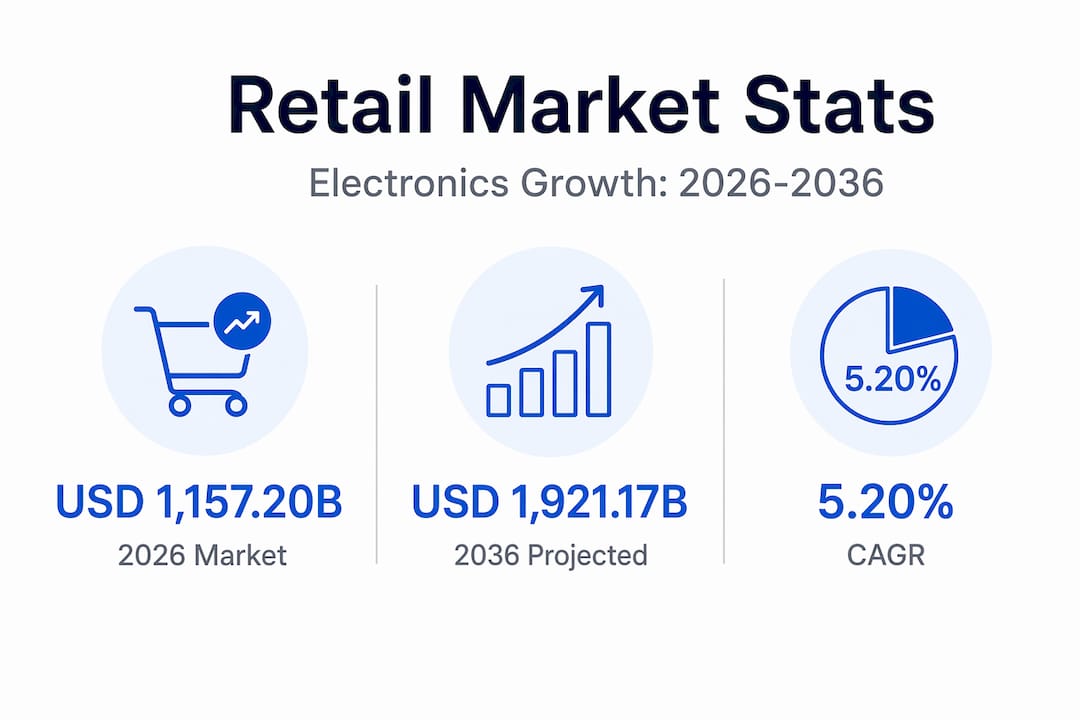
Electronics retail is far more than a store selling phones and laptops. It’s a complex, multi-channel industry that spans physical showrooms, online marketplaces, and direct manufacturer sales, all competing for the same buyer at different moments in their purchase journey. The global electronics retailing market is projected to grow from USD 1,157.20 billion to USD 1,921.17 billion by 2036 at a CAGR of 5.20%. If you’re researching electronics retail concepts, understanding what’s actually driving that number matters more than the number itself.
Table of Contents
- Key takeaways
- What is electronics retail: definition and core components
- Electronics retail market trends shaping 2026 and beyond
- Consumer behavior and the strategic role of physical stores
- Operational strategies and innovations in electronics retail
- Benefits and challenges of electronics retail
- My take on where electronics retail is actually headed
- Explore Singapore’s electronics retail scene firsthand
- FAQ
Key takeaways
| Point | Details |
|---|---|
| Electronics retail definition | It covers physical stores, online marketplaces, and omnichannel formats selling consumer electronics. |
| Market growth is substantial | The sector is set to nearly double in size between 2026 and 2036. |
| Physical stores still win on high-value purchases | Hands-on testing and expert staff keep brick-and-mortar essential for premium buys. |
| Omnichannel strategy is now standard | Retailers blending physical and digital channels consistently outperform single-channel competitors. |
| Consumer risks require active management | Grey market products, refurbishment tiers, and warranty gaps are real pitfalls buyers must navigate. |
What is electronics retail: definition and core components
The electronics retail definition goes well beyond a checkout counter. At its core, electronics retail refers to the distribution and sale of consumer electronics products to end buyers through any channel: a physical store, an online marketplace, a brand’s own website, or a combination of all three.
The industry breaks into four distinct retailer types. Mass merchants like major big-box chains carry electronics alongside home goods and appliances. Niche specialists focus on a single category, such as audio equipment or cameras, and compete on depth of product knowledge. Online marketplaces aggregate thousands of sellers onto a single platform. Finally, manufacturer-direct sales bypass retail entirely, with brands like Apple and Samsung selling straight to consumers through their own stores and websites.
Product categories covered under the electronics retail umbrella are broader than most people assume:
- Smartphones and mobile accessories
- Laptops, desktops, and computing peripherals
- Entertainment devices including televisions, gaming consoles, and streaming hardware
- Wearables such as smartwatches and fitness trackers
- Smart home products including connected speakers, security cameras, and lighting systems
Here is a quick comparison of how different retail formats operate:
| Store type | Channel | Strengths | Typical product mix |
|---|---|---|---|
| Mass merchant | Physical and online | Price, convenience, volume | Broad, mainstream electronics |
| Niche specialist | Primarily physical | Expertise, depth, demo access | Category-specific products |
| Online marketplace | Digital only | Price comparison, selection | All categories |
| Manufacturer direct | Physical and online | Brand experience, warranty confidence | Own brand products |
Understanding how electronics retail works across these different formats is the first step to making smarter decisions, whether you are a consumer, an investor, or a potential retailer.
Electronics retail market trends shaping 2026 and beyond
The scale of electronics retail is one thing. The speed at which it is changing is another. That projected CAGR of 5.20% over the next decade does not happen in a straight line. Several specific forces are compressing change into short windows.
The most visible shift is the move from quantity to quality in physical retail. Leading retailers are moving from opening more stores to making fewer stores far more powerful. A compelling example comes from Malaysian retailer Senheng, which converted standard outlets into larger experiential “powerhouse” formats. The result: stronger customer capture rates and better performance per location.
Retail media is the other force reshaping the industry’s economics. Retailers like Micro Center are now launching retail media platforms that use deep first-party data to reach niche tech enthusiast segments that broad digital advertising simply cannot access with the same precision. For advertisers and brand partners, this is a significant change in how electronics retail generates revenue beyond the sale itself.
Omnichannel integration has moved from competitive advantage to baseline expectation. Consumers now expect to research online, experience in-store, and complete the purchase wherever is most convenient. Retailers that fail to connect those touchpoints lose customers at every transition point.
Pro Tip: When evaluating an electronics retailer’s credibility, check whether they operate consistent pricing and product availability across their physical and online channels. Significant discrepancies between channels often signal inventory or operational issues worth being cautious about.
Here’s what the market growth trajectory looks like by the numbers:
| Metric | 2026 | 2036 (projected) |
|---|---|---|
| Global market size | USD 1,157.20 billion | USD 1,921.17 billion |
| CAGR | 5.20% | 5.20% |
| Key growth drivers | Omnichannel adoption, experiential retail, smart home demand | AI-integrated retail, expanded wearables, regional market growth |
Consumer behavior and the strategic role of physical stores
Knowing the electronics retail definition is useful. Understanding why consumers actually behave the way they do inside that system is where real insight lives.
Physical stores remain non-negotiable for high-consideration purchases. According to research, 68% of consumers researching high-value electronics visit at least one physical store before buying, even if they ultimately purchase online. The reason is straightforward: a $1,500 laptop or a premium mirrorless camera is not a product you want to buy on spec sheets alone. You need to feel the keyboard, see the screen in real lighting, and talk to someone who actually knows the product.
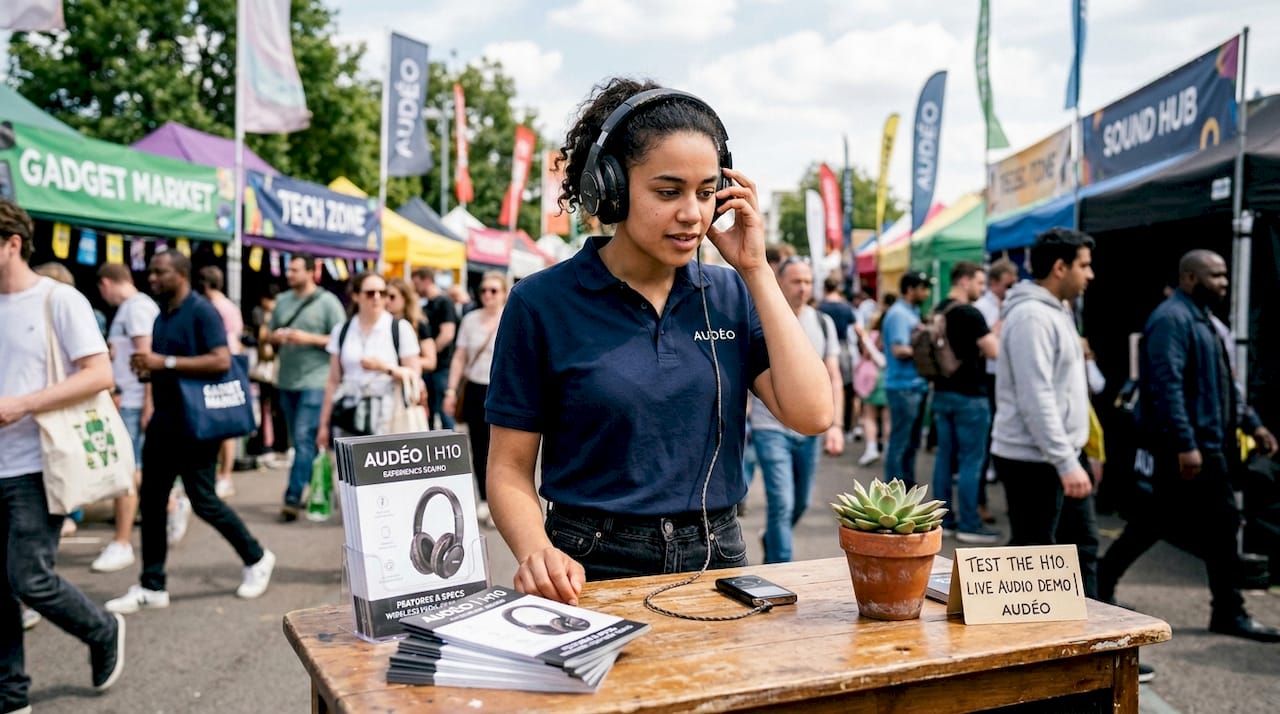
Expert staff and demo access are the two assets physical electronics retail has that no online channel can fully replicate. A knowledgeable staff member can identify in two minutes what a buyer actually needs versus what they think they want. That kind of conversation compresses the purchase decision cycle considerably.
Online retail, on the other hand, excels for standardized products where specifications are fully understood. Replacement cables, known accessories, and repeat purchases of familiar brands are natural fits for e-commerce. The value of physical stores becomes clearest precisely when product decisions are complex, unfamiliar, or high-stakes.
Omnichannel features like buy-online-pickup-in-store (BOPIS) have become important middle-ground tools. They let consumers enjoy online pricing transparency while giving them same-day access and the option to inspect the product before leaving the store. Retailers offering BOPIS consistently report higher average transaction values from those interactions.
Pro Tip: For high-consideration electronics purchases, visit a physical store first to test the product, then check online pricing. If the price difference is small, buying in-store gives you immediate access to local warranty support and return assistance that online purchases often complicate.
Operational strategies and innovations in electronics retail
Electronics retail operations in 2026 look nothing like they did a decade ago. The back-end systems and strategies now required to run a competitive retail business have become significantly more sophisticated.
Here are the key operational approaches defining retailer success right now:
-
Multi-tier distribution control. Best Buy uses a tightly controlled structure involving private labels, certified distributors, and strategic national brands. This layered approach protects product quality and margin while giving the retailer leverage in brand negotiations.
-
Marketplace compliance standards. The Best Buy Marketplace requires sellers to maintain strict performance metrics: a customer rating of at least 4.7, a return rate below 1.2%, and 24-hour fulfillment. These requirements filter out low-quality operators and maintain the trust consumers place in the platform.
-
Digital shelf label technology. Walmart’s adoption of digital shelf labels demonstrates that price updates across thousands of SKUs can be compressed from a multi-day labor task into a matter of minutes. This frees store staff to spend more time with customers rather than restocking or manual price-checking.
-
Retail media monetization. Electronics retailers with strong first-party purchase data are building ad platforms that let brands pay to reach proven buyers rather than broad audiences. This creates a revenue stream independent of product margin, which is particularly valuable in a category where margins are often thin.
-
Hybrid B2B and B2C models. RadioShack’s revival demonstrates that diversification matters: B2B operations account for 60% of its product sales, with the remainder split between e-commerce and online marketplaces. This balance provides revenue stability when any single channel underperforms.
Channel compliance and inventory management remain the most persistent operational challenges. A retailer carrying too many SKUs across too many channels without synchronized inventory risks frequent stockouts and order cancellation rates that damage marketplace standing.
Benefits and challenges of electronics retail
The benefits of electronics retail for consumers are real, but so are the risks. Understanding both sides gives you a much clearer picture of what to know about electronics retail before spending serious money.
The genuine advantages include:
- Access to the latest technology as soon as it reaches market, often with hands-on expert guidance
- Price competition across retailers and channels that consistently pulls prices down for consumers
- Local warranty and repair support from established retailers, which reduces risk on high-value purchases
- Product testing opportunities in physical stores, particularly for audio, display, and input devices
The challenges are equally real. Grey market products, devices imported and sold outside official distribution channels, look identical to legitimate stock but often carry no local warranty. Refurbished electronics now represent 12 to 18% of in-store electronics revenue, and the difference between a manufacturer-certified refurb and a seller-refurb with no real quality check can be significant. Buyers who do not ask the right questions can end up with a product that has no serviceable warranty.
Retailers address these risks through official brand partnerships, authorized dealer certifications, and clear return policies. The presence of those credentials is not just marketing. It is a meaningful signal of accountability.
Pro Tip: Always ask a retailer directly whether a product carries a local or international warranty, and request documentation before paying. An authorized dealer will have no hesitation providing that information. Reluctance to answer that question clearly is a significant warning sign.
My take on where electronics retail is actually headed
I’ve spent a lot of time watching how people talk about the future of electronics retail, and I keep running into the same assumption: that online will eventually win everything. I don’t buy it. Not for the product categories that matter most.
What I’ve actually observed is that the retailers pulling ahead are the ones that treat physical space as an experience platform rather than a warehouse with lights on. The Senheng approach of quality over quantity in store formats is not a regional outlier. It reflects something true about how consumers engage with complex, high-value technology.
In my view, the businesses that will struggle post-2026 are the ones still trying to compete on price alone. Retail media and first-party data are creating a new kind of moat. The retailers who know their customers deeply and can monetize that knowledge through precision advertising will outperform those who simply chase margin on transactions.
My advice: if you’re watching this market, stop thinking about online versus physical as a competition. The real question is which retailers have built systems where both channels make each other stronger. That’s the actual structural advantage worth tracking.
— Aloysius
Explore Singapore’s electronics retail scene firsthand
Sim Lim Square is one of the most concentrated and vibrant electronics retail environments in Southeast Asia, and Simlimsquareinsider is the platform built to help you get the most from it.
Whether you are comparing store types, hunting for the best tech deals, or looking to understand how physical electronics retail actually works in practice, Simlimsquareinsider gives you store directories, expert guides, and real video walkthroughs of the mall’s floors and offerings. Take a visual tour of the space through the Sim Lim Square tech video tour to see the retail environment before you visit. For a deeper look at how to shop smart across different store formats, the guide on finding electronics deals is a practical starting point that translates market knowledge into real purchase decisions.
FAQ
What is the electronics retail definition?
Electronics retail refers to the distribution and sale of consumer electronics to end buyers through physical stores, online marketplaces, or omnichannel platforms combining both. It covers product categories from smartphones and laptops to wearables and smart home devices.
How does electronics retail work across channels?
Retailers operate through physical locations, branded websites, and third-party marketplaces simultaneously. Consumers often research in one channel and purchase in another, which is why omnichannel integration has become a core operational requirement rather than a differentiator.
What are the main benefits of electronics retail for consumers?
The primary benefits include access to the latest technology, competitive pricing across multiple retailers, hands-on product testing in stores, and local warranty and repair support from authorized dealers.
What are the biggest electronics retail market trends right now?
The dominant trends include the shift to experiential store formats, the rise of retail media powered by first-party data, and the growing adoption of omnichannel strategies that blend physical and digital purchase journeys. The global market is projected to reach USD 1,921.17 billion by 2036.
How can consumers protect themselves when buying electronics?
Always confirm whether a product carries a local or international warranty, verify the retailer’s authorized dealer status, and be cautious with refurbished products unless they carry clear manufacturer certification. Asking these questions before purchase is the most reliable protection available.
Recommended
- How electronics malls give you a real edge in Singapore – Sim Lim Square Insider
- Tech retail in Singapore: Trends, experiences, and smart shopping – Sim Lim Square Insider
- Best strategies to find electronics deals at Sim Lim Square – Sim Lim Square Insider
- Electronics store types at Sim Lim Square for smart shopping – Sim Lim Square Insider