

IT Services Singapore: What Businesses Need to Know
TL;DR:
- IT services in Singapore include support, cybersecurity, and consulting to ensure business security and compliance. Three models—helpdesk, managed IT, and outsourced CTO—serve different needs, with local providers offering superior regulatory understanding and faster support. Choosing a provider with proper certifications and proactive support minimizes risks and supports growth in Singapore’s regulated environment.
IT services in Singapore are defined as the full range of technology support, management, and consulting functions that keep businesses running, secure, and compliant. These services span helpdesk troubleshooting, managed IT support, cloud migration, cybersecurity solutions, and strategic IT consulting. Singapore’s dense regulatory environment, including frameworks like ISO 27001, the Monetary Authority of Singapore’s Technology Risk Management (MAS TRM) guidelines, and the Personal Data Protection Act (PDPA), makes professional IT support a practical necessity rather than a luxury. Whether you run a five-person startup or a mid-sized enterprise, the right technology support partner determines how fast you recover from disruptions and how confidently you scale.
What IT services in Singapore actually cover
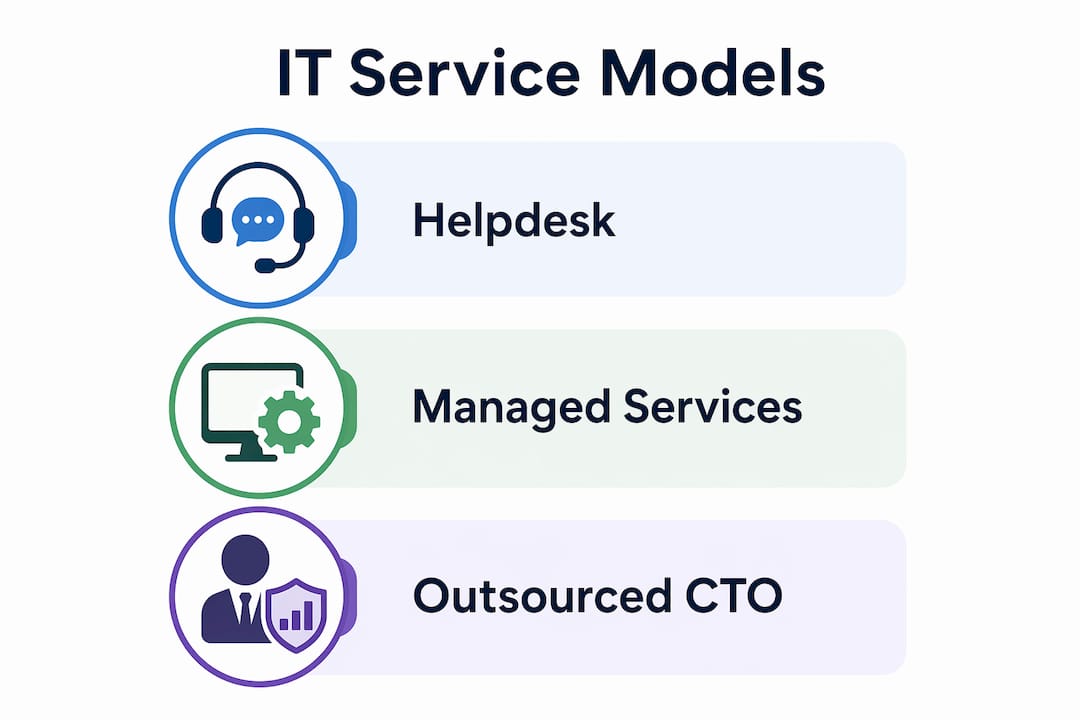
IT services in Singapore fall into three broad delivery models, each designed for a different level of need.
The first model is helpdesk and break-fix support. This is reactive. You call when something breaks, a technician fixes it, and you pay per incident. It works for very small operations with minimal technology dependency, but the unpredictable costs and downtime add up quickly.
The second model is managed IT services. Managed IT services differ from break-fix support by providing proactive system monitoring, scheduled maintenance, and a fixed monthly fee. That fixed fee eliminates surprise invoices and gives your finance team a predictable line item. Retention rates for established managed service firms in Singapore reach 95%, which signals that businesses rarely switch once they find a provider that works.
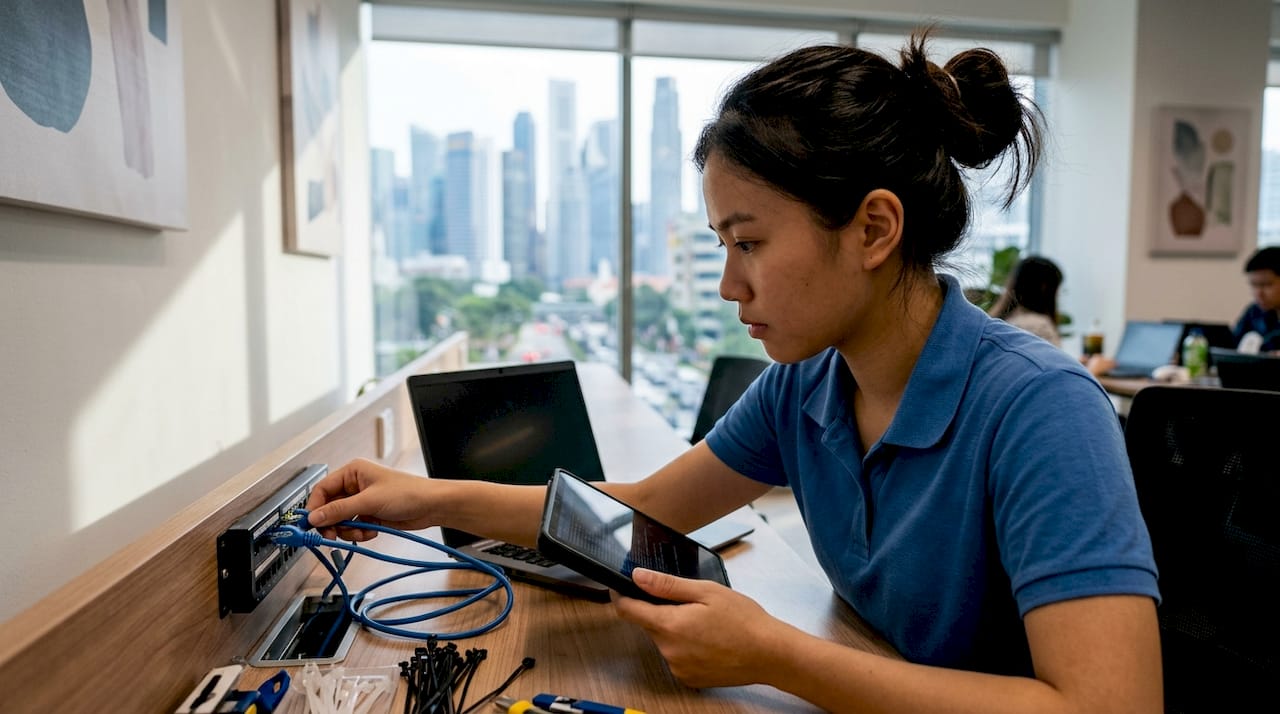
The third model is outsourced CTO and IT consulting. IT service tiers in Singapore commonly include this premium tier for businesses that need long-term technology strategy, not just daily troubleshooting. An outsourced CTO advises on infrastructure investment, vendor selection, and digital transformation roadmaps.
Here is how the three tiers compare across key dimensions:
| Service tier | Scope | Best suited for |
|---|---|---|
| Helpdesk and break-fix | Reactive troubleshooting, per-incident billing | Micro-businesses with minimal IT dependency |
| Managed IT services | 24/7 monitoring, patch management, security oversight, flat monthly fee | SMEs needing predictable costs and uptime |
| Outsourced CTO and consulting | Strategic planning, compliance advisory, vendor management | Growing businesses with complex technology needs |
Pro Tip: Ask any prospective provider whether their monthly fee includes security patch management and threat monitoring. Many entry-level plans exclude these, leaving you exposed without realizing it.
How do IT services address compliance and cybersecurity in Singapore?
Singapore’s regulatory requirements set a high bar for any business handling sensitive data or operating in a regulated sector. Regulated industries require IT partners skilled in compliance advisory alongside technical support to maintain lawful operation and data security. This is not optional for finance, healthcare, or legal firms.
Three frameworks define the compliance baseline for most Singapore businesses:
- ISO 27001 is the international standard for information security management systems. Providers certified to ISO 27001 have independently verified controls for data protection, access management, and incident response.
- MAS TRM applies to financial institutions and their technology vendors. It mandates specific controls around system resilience, third-party risk, and cyber incident reporting.
- PDPA governs how all Singapore businesses collect, use, and store personal data. A breach can trigger investigations and financial penalties.
Governance, Risk, and Compliance (GRC) frameworks are now integrated into managed IT service offerings for regulated sectors. Providers that bundle GRC advisory with technical support reduce the compliance burden on your internal team significantly.
Singapore’s Cyber Essentials certification was updated in 2025 to include cloud and AI security requirements. The previous 2022 version retires effective february 2026. That update matters because businesses relying on older certification benchmarks may now have gaps in their cloud security posture.
Pro Tip: When evaluating cybersecurity solutions, ask providers to map their service controls directly to MAS TRM or PDPA requirements. A provider who cannot do this on request likely lacks the depth your regulated business needs.
Choosing a provider with local certifications and regulatory knowledge is not just about ticking boxes. Regulatory-aligned providers handle complex industry needs more effectively because they understand how Singapore’s enforcement bodies interpret and apply these standards in practice.
Why local Singapore IT providers outperform offshore alternatives
Local IT service providers in Singapore deliver measurable advantages that offshore or international-only firms cannot replicate. Local expertise reduces regulatory risks and improves support speed. Both of those outcomes directly affect your bottom line.
Here are the four core advantages of working with a Singapore-based provider:
- Regulatory fluency. Local providers understand MAS TRM, PDPA, and Singapore’s Cyber Essentials certification in operational terms, not just theoretical ones. They know how audits are conducted and what documentation regulators expect.
- Faster on-site response. Service Level Agreements (SLAs) with on-site response commitments are only meaningful when your provider can physically reach your office quickly. A provider based in Singapore can dispatch a technician to your premises within hours, not days.
- Cultural and business context. Singapore’s business environment has specific norms around vendor relationships, procurement cycles, and communication. Local teams understand these dynamics and work within them naturally.
- Alignment with local market changes. Singapore’s technology regulatory environment updates frequently. Local expertise enables providers to tailor solutions rapidly and comply with continual updates in standards and certifications. An offshore provider often lags behind these changes.
The practical result is fewer compliance surprises, faster incident resolution, and a provider who speaks the same regulatory language as your auditors. For businesses in the financial services or healthcare sectors, that alignment is worth more than a lower offshore price point.
How to choose the right IT service provider in Singapore
Selecting the right provider starts with understanding what your business actually needs, not what sounds most impressive in a sales presentation. Many Singapore IT providers offer free initial consultations of 30–60 minutes to assess your IT infrastructure and align services with your business objectives. Use that consultation to test the provider’s depth, not just their pitch.
Evaluate providers against these criteria:
- Certifications and compliance capabilities. Confirm they hold ISO 27001 certification and can demonstrate familiarity with MAS TRM and PDPA. Evaluating an IT service provider should include a governance and compliance capabilities assessment.
- Service scope and SLA terms. Understand exactly what is included in the monthly fee. Patch management, after-hours support, and security monitoring should be explicitly listed, not implied.
- Proactive versus reactive posture. Reactive break-fix support results in higher long-term costs and downtime. Proactive managed services reduce disruptions through continuous monitoring. Ask how many issues the provider detects and resolves before clients notice them.
- Customer retention and team stability. A stable, experienced local team contributes significantly to long-term service reliability and trust. High staff turnover at a provider means you constantly re-educate new technicians about your environment.
- Scalability of the engagement. Your IT needs will grow. Confirm the provider can move you from helpdesk support to managed services to consulting as your business scales, without forcing a full vendor change.
The trigger for moving to managed services is often internal. Businesses should consider managed IT services when internal staff spend excessive time on technical issues instead of core work, indicated by frequent downtime or security concerns. If your team spends more time resetting passwords and chasing vendors than doing their actual jobs, that is the signal.
Pro Tip: Request a reference from a client in your industry before signing any managed services contract. A provider with proven experience in your sector will have specific examples of compliance challenges they have solved, not just generic case studies.
For businesses that also want to understand how tech retail in Singapore intersects with IT procurement, Simlimsquareinsider covers how retail organizations use technology services for operational efficiency.
Key Takeaways
Choosing the right IT service provider in Singapore requires matching your compliance obligations, service tier needs, and growth trajectory to a provider with local regulatory expertise and a proactive support model.
| Point | Details |
|---|---|
| Service tiers define scope | Helpdesk, managed services, and outsourced CTO consulting serve different business scales and needs. |
| Compliance is non-negotiable | ISO 27001, MAS TRM, and PDPA alignment must be verified before signing any provider contract. |
| Local providers reduce risk | Singapore-based firms respond faster and understand local regulatory updates in real time. |
| Proactive beats reactive | Managed IT services with flat monthly fees reduce downtime and deliver predictable costs. |
| Evaluate before you commit | Use free consultations and client references to test provider depth, not just their service catalog. |
The IT strategy mistake most Singapore businesses make
I have watched businesses in Singapore treat IT as a cost to minimize rather than a function to invest in deliberately. The pattern is predictable. A company runs on reactive break-fix support for years, accumulates technical debt, then faces a security incident or compliance audit that costs far more to remediate than a managed services contract would have cost over the same period.
Digital transformation advisors caution against viewing IT as a cost center. Technology aligned as a strategic asset drives competitive advantage. That framing shift changes how you evaluate providers. Instead of asking “what is the cheapest option,” you ask “which provider helps us grow and stay compliant.”
The businesses I see get this right share one habit. They treat their IT provider as a partner in quarterly business reviews, not just a vendor they call when things break. Migrating to managed services frees up internal resources, allowing staff to focus on growth rather than firefighting IT issues. That freed capacity compounds over time.
My honest advice: do not wait for a breach or a failed audit to take IT governance seriously. The Cyber Essentials 2025 update and the ongoing evolution of MAS TRM mean the compliance bar keeps rising. Providers who stay current with these changes are worth more than those who offer the lowest monthly rate.
— Aloysius
What Simlimsquareinsider offers for Singapore IT guidance
Simlimsquareinsider covers the full spectrum of technology resources available in Singapore, from retail hardware to professional IT services guidance. If you are comparing service options, evaluating smart technology procurement strategies, or looking for practical guides on what to expect from technology support in Singapore, the platform provides curated, experience-based content built for the local market.
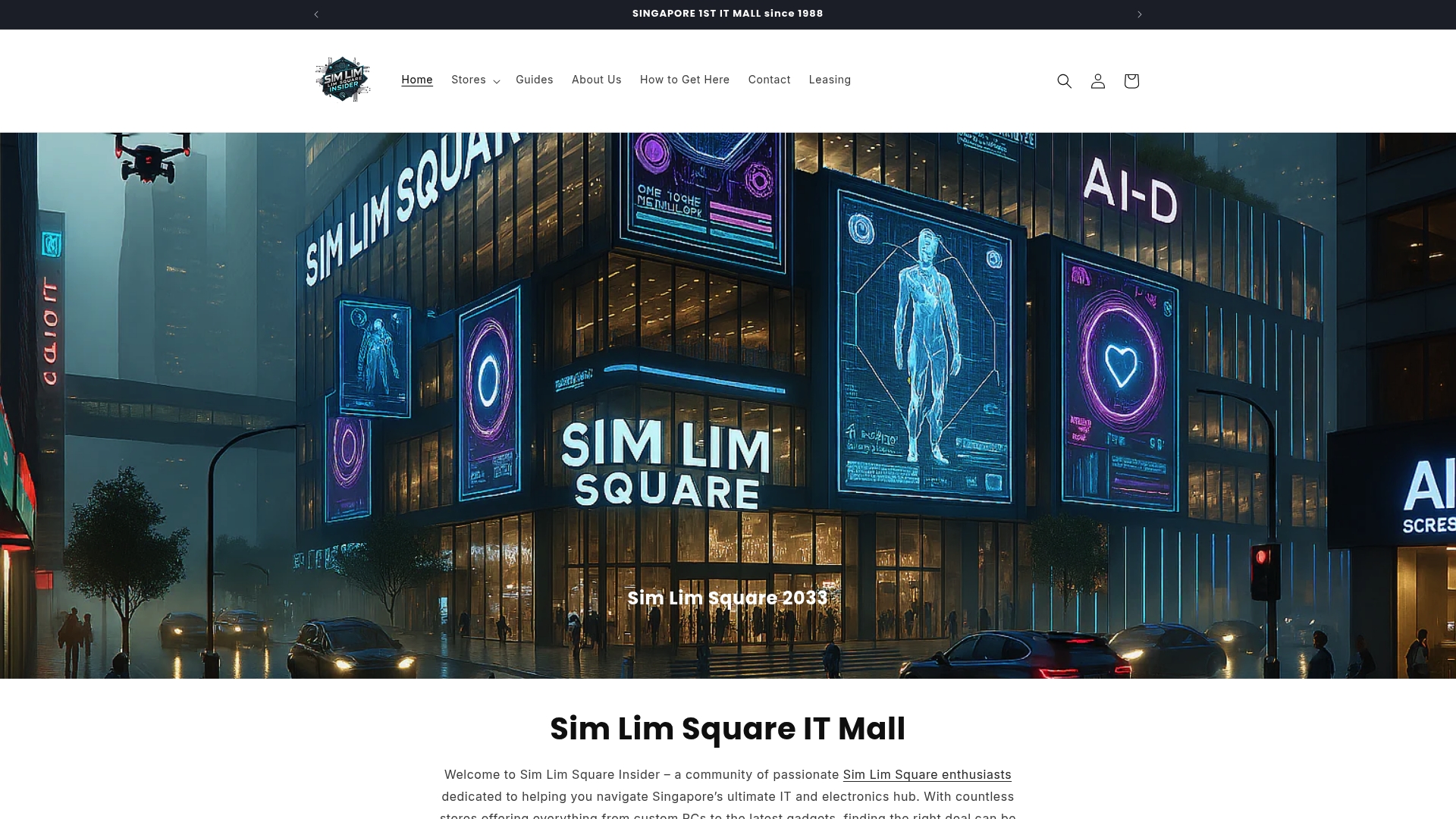
Simlimsquareinsider’s IT resources and guides give you a starting point for understanding what providers offer, what questions to ask, and how to align technology decisions with your business goals. The platform’s community-driven insights reflect real experiences from Singapore’s tech ecosystem, not generic advice written for a global audience.
FAQ
What are IT services in Singapore?
IT services in Singapore cover managed support, helpdesk troubleshooting, cybersecurity solutions, cloud services, and IT consulting. Providers deliver these through tiered service models ranging from reactive break-fix to fully managed monthly contracts.
How much do managed IT services in Singapore cost?
Most managed IT service providers in Singapore use a flat monthly fee model. The exact cost depends on the number of users, devices, and service scope, but the flat-fee structure replaces unpredictable per-incident billing with a fixed budget line.
What certifications should a Singapore IT provider hold?
ISO 27001 is the primary certification to look for, as it verifies independent controls for information security management. Providers serving regulated industries should also demonstrate familiarity with MAS TRM and PDPA compliance requirements.
When should a business switch to managed IT services?
The clearest signal is when internal staff spend significant time resolving technical issues instead of their core responsibilities. Frequent downtime, recurring security concerns, and unpredictable IT costs are all indicators that a managed services model would deliver better outcomes.
What is Singapore’s Cyber Essentials certification?
Cyber Essentials is a Singapore government-backed cybersecurity certification. The 2025 update added cloud and AI security requirements, and the previous 2022 version retires effective february 2026, making recertification necessary for businesses that hold the older credential.
Recommended
- Tech retail in Singapore: Trends, experiences, and smart shopping – Sim Lim Square Insider
- In-store tech support at Sim Lim Square explained – Sim Lim Square Insider
- Laptop shopping tips: Singapore buyer’s smart guide – Sim Lim Square Insider
- Why compare tech retailers in Singapore for smart shopping – Sim Lim Square Insider